Yemen's Houthi movement declared a naval blockade of Saudi Arabia in the Red Sea on July 20, 2026, and followed the declaration with claimed attacks on Saudi vessels and Red Sea ports, including oil infrastructure, extending the Iran war's maritime front to the kingdom's western seaboard (Critical Threats/Iran Update, July 25, 2026). The escalation lands on a kingdom already managing the consequences of the Gulf-side closure and energy-infrastructure damage, and it converts the Red Sea, the corridor Saudi Arabia had positioned as its safe alternative, into a second front.
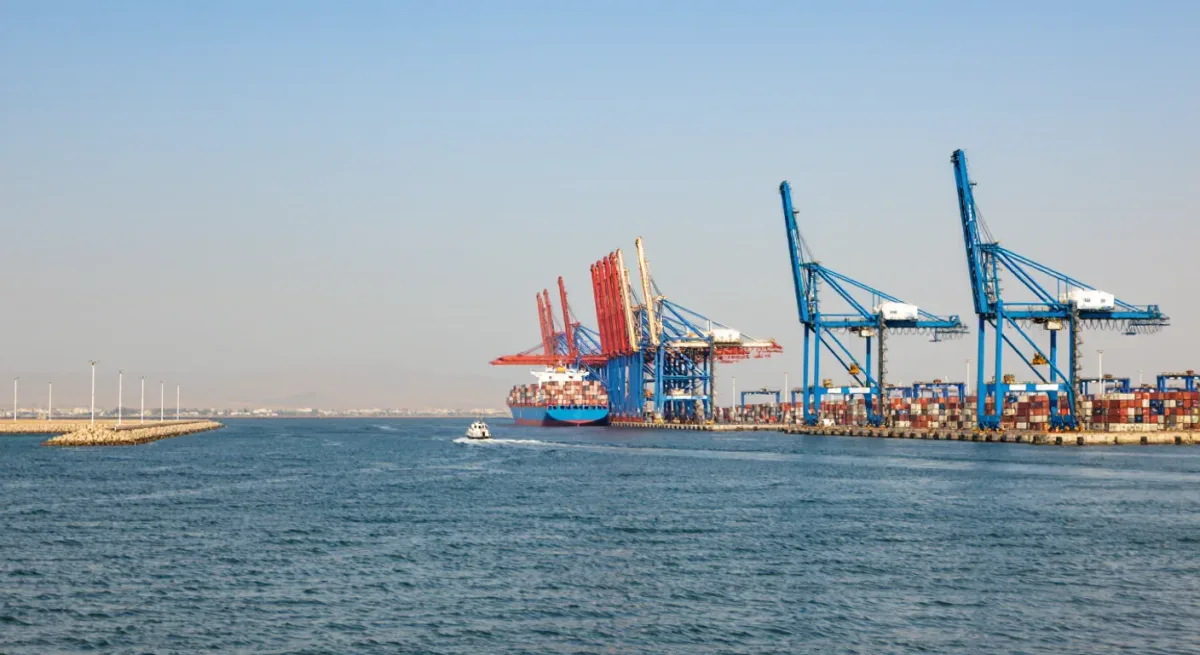
The geography of the declaration is its significance. Saudi Arabia exports oil through the Red Sea at Yanbu, receives goods through Jeddah Islamic Port, and has spent the last decade building the corridor's economy: the Red Sea Project tourism developments, the NEOM industrial ambitions on the Gulf of Aqaba coast, and the piped crude that bypasses the Strait of Hormuz by crossing the peninsula westward. A Houthi naval blockade, enforced with the missile and drone arsenal the movement has demonstrated against commercial shipping since 2023, threatens precisely the route the kingdom built as its insurance against the eastern chokepoint.
What has been attacked
The claims following the declaration cover Saudi-flagged vessels and port infrastructure on the kingdom's west coast, oil facilities among them, per the monitoring summaries of the period. Verification runs behind claims in this theater as in every Houthi campaign, but the pattern matches the movement's methods from the Red Sea shipping campaign it has run since late 2023: anti-ship missiles, drones and unmanned surface craft against commercial and naval targets, launched from Yemen's coastal highlands, with accuracy sufficient to force insurance repricing even when interceptions succeed. Egypt condemned the missile attacks on Saudi territory in the war's wider diplomatic traffic.
Why the Houthis widened the front
The movement's declared logic is solidarity with Tehran in the war against the United States and Israel, the same framing that drove its 2023-2024 campaign against Israel-linked shipping, but the timing carries its own reading. The US naval drawdown reported in the region through the summer removed some of the escort umbrella that had contained the earlier campaign, and the war's land front in Iran has constrained the supply and attention of every actor who once restrained the movement. The Houthis also act on domestic Yemeni logic: the movement's legitimacy economy runs on resistance credentials, and a blockade declaration costs it little domestically while its costs fall on the enemy's ports and the world's insurance markets.
| Maritime front | Status |
|---|---|
| Strait of Hormuz | Closed by Iran since February; US naval blockade posture |
| Gulf LNG infrastructure | Ras Laffan damaged March 2026 |
| Red Sea (Saudi front) | Houthi blockade declared July 20, 2026 |
| Bab el-Mandeb approaches | Insurance war-risk at extreme levels |
The Saudi response taking shape
The kingdom's answers visible by late July run on three tracks. The diplomatic one: Saudi Arabia requested missile-defense support from allies, per Al Jazeera's reporting on the war's alliance politics, with Egypt's Red Sea security role an open question in Cairo's coverage. The naval one: the joint Egypt-Saudi naval force agreement the two states reached for Red Sea threats, and the wider multinational maritime coalition Riyadh unveiled at the end of the month, with more than a dozen states signing on, institutionalizing the corridor's defense. And the economic one: rerouting what can be rerouted to eastern and air corridors, an expensive arithmetic for a kingdom whose western ports feed both domestic consumption and the tourism giga-projects now sitting on a war coast.
What it means for shipping and the region
For world shipping, the declaration completes the encirclement: both ends of the Arabian Peninsula's trade now sit inside active threat envelopes, and the Suez corridor that depends on Bab el-Mandeb access prices accordingly. For regional states, the escalation vindicates the naval-buildup logic of the Egyptian and Saudi fleets and the coalition diplomacy both have pursued. And for Yemen itself, the front's widening freezes further the peace process that the UN had shepherded, with the movement's calculus now embedded in the wider war's, and a settlement in Sanaa impossible to separate from one in the Gulf.
The insurance and port mechanics
The blockade's practical enforcement runs through the same instruments the Red Sea campaign made familiar. War-risk underwriters price Saudi western ports and the Yanbu terminal approaches as named-threat areas now, and the premiums move with each claimed attack regardless of verification, because the market prices demonstrated capability rather than confirmed damage. Port operations adapt: Jeddah and Yanbu have adjusted arrival windows and inspection regimes, convoy patterns where escort capacity allows, and the diversion of what can be diverted to the eastern coast's ports, which adds days and cost to the kingdom's western supply chains. The Houthi arsenal's reach is the constraint that matters, missiles and drones with the range to hold the entire eastern Red Sea littoral at risk from Yemen's highlands, and no interception architecture, American or coalition, has eliminated launch capability rather than individual weapons. That is the blockade's military logic in one sentence: the threat does not need to succeed to function, it needs only to be priced, and the insurance market does the pricing continuously.
For Yemen's civilian population, the widening front promises more of the war's familiar arithmetic: the country's imports, already priced among the world's most expensive logistics, face another premium layer, and the humanitarian operation's corridors run through the same waters now patrolled as a battlespace.
For the coalition answer that followed days later, read our report on Saudi Arabia's multinational maritime defense alliance, and browse the MENA news section for continuing coverage.