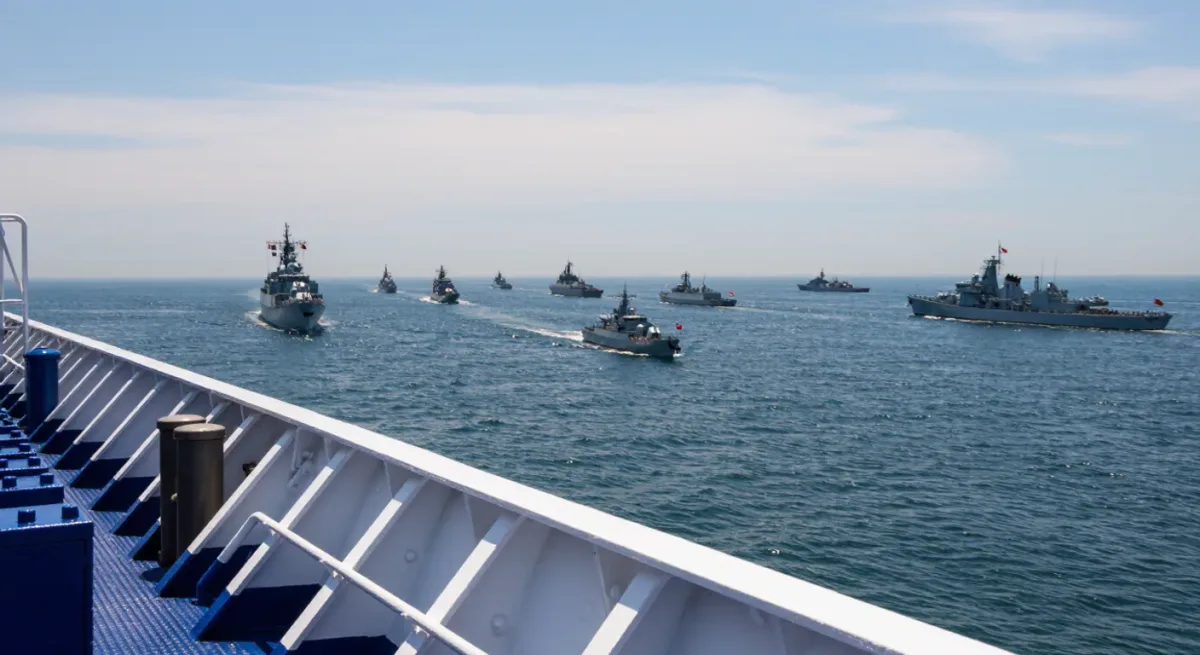
Saudi Arabia announced plans on July 30, 2026 for an international alliance to protect Red Sea shipping, and by the week's end Riyadh and 13 other countries had formed the maritime defense coalition covering the key waterways of West Asia (Reuters, July 30, 2026; Al Jazeera). The move answers a double pressure: the Houthi naval blockade declared against the kingdom on July 20 with attacks on Saudi vessels and ports, and the drawdown of US naval presence in the region that had underwritten the corridor's security until now (Global Issues, August 3).
The initiative marks a structural shift in the region's security provision. Since the 2023-2024 Red Sea shipping crisis, the escort-and-interception umbrella over the corridor has been substantially American, built on the multinational operations that assembled after the Houthi campaign against Israel-linked shipping began. A Saudi-led coalition, with regional and international members operating under an Arab-state flag rather than a US one, converts the corridor's defense from a borrowed guarantee to an owned one, exactly the burden-sharing transition Washington's regional posture has demanded and, in drawing down, forced.
What the coalition is for
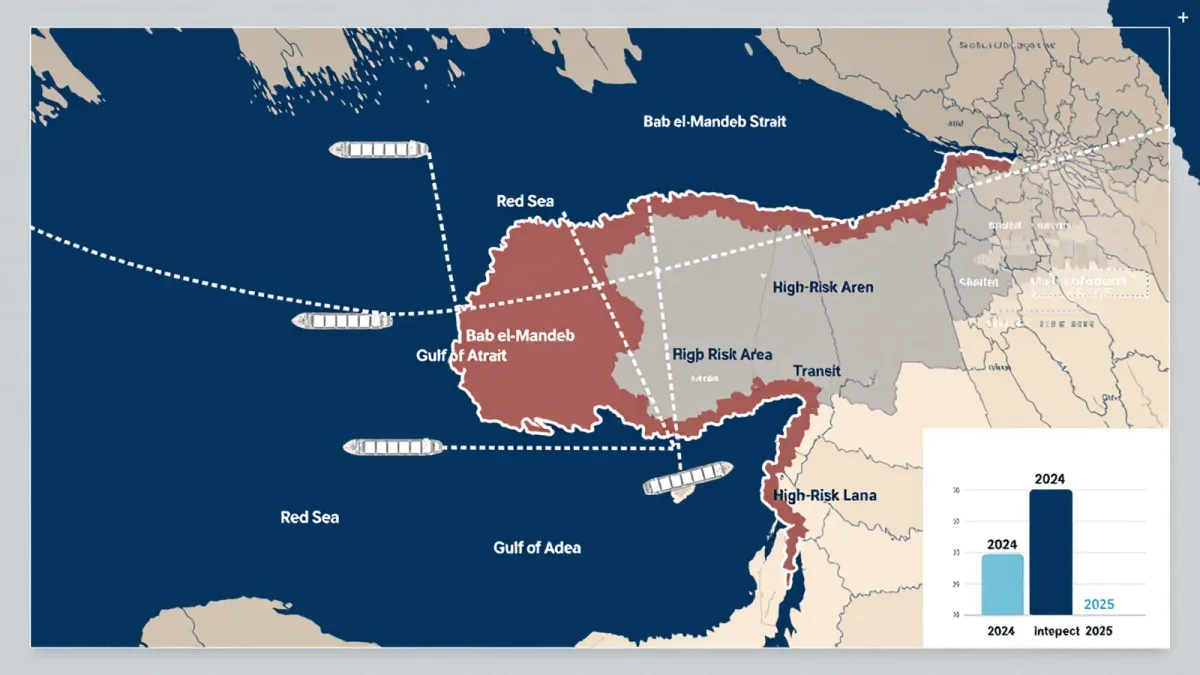
The announced mission covers protection of shipping in the key waterways of West Asia: the Red Sea lanes, the Bab el-Mandeb approaches, and by extension the traffic that feeds Suez from the south. The tasks the framing implies are the ones the US-led operations performed: convoy escort, drone and missile interception over the sea lanes, patrol of the launching coastlines' maritime approaches, and the intelligence fusion that makes interception possible. The Egypt-Saudi joint naval force agreement reached in the same period supplies the alliance's Arab core, with Egypt's fleet the largest navy on the corridor and its own Suez interests directly engaged.
| Element | Detail |
|---|---|
| Announcement | July 30, 2026, Saudi-led multinational coalition |
| Membership | Saudi Arabia plus 13 other states |
| Mission | Protection of shipping in key West Asian waterways |
| Context | Houthi blockade of July 20; US naval drawdown |
Why now
The timing is the arithmetic of exposure and opportunity. Exposure: the kingdom's western seaboard holds Yanbu's oil terminals, Jeddah's ports, and the Red Sea coast's giga-projects, and the Houthi blockade put all of it inside a threat envelope the Saudi navy alone could not patrol while the Gulf coast needs garrisoning too. Opportunity: the US drawdown, reported through the summer, removes the free-rider option; the war has already built the interoperability, the joint Egypt-Saudi structures, the Gulf air-defense integrations that a coalition needs; and the strike-pause diplomacy of late July gives the new alliance a mission framed as protection rather than escalation. Al Jazeera's analysis of the initiative framed the coalition as Riyadh accepting that the American era of Gulf security is ending on a schedule set in Washington.
What it means for shipping and trade
For the shipping industry, the coalition's arrival is a question of proof. War-risk underwriters price demonstrated control of threat, not announced coalitions, and the corridor's rates will fall only when transits resume at volume under the new escort arrangements without incident. The stakes extend beyond the region: the Suez route's share of Asia-Europe traffic collapsed through the Houthi campaign and the wider war, and every week of rerouting around the Cape adds cost to the global system that consumer prices eventually absorb. Egypt, whose canal receipts are the state's third revenue pillar, is the coalition's most motivated member beyond Riyadh itself.
The questions the coalition must answer
- Rules of engagement: whether interception authority over Yemeni coastal launches is delegated and exercised, or whether the coalition patrols the sea while the land threat persists.
- Membership breadth: which European and Asian naval powers join an Arab-led structure, and what the US role becomes, partner rather than patron or absent altogether.
- The Yemen file: whether maritime containment stabilizes into a tacit bargain with the Houthi authorities on shipping, or becomes the siege layer of a new northern-Yemen campaign.
- Durability: coalitions assembled against a live threat survive; those assembled against a paused one depend on the diplomacy holding.
What naval capacity the corridor needs
The military requirement defines the coalition's real size. Patrolling the Red Sea's length and the Bab el-Mandeb approaches is a frigate-and-corvette mission, dozens of hulls for continuous presence, plus the airborne surveillance that finds the small boats and launch signatures the Houthis employ, and the missile-defense umbrella over the Saudi and Egyptian coasts' high-value targets. Egypt brings the region's largest navy and the canal's own motivation; the Gulf states add hulls and the integrated air-defense picture their systems have built; and the European and Asian naval powers whose commerce transits the corridor hold escort experience from the US-led operations that preceded them. The US role, reduced but not gone per the drawdown reporting, remains the questions' center: whether American intelligence and surveillance fusion feeds an Arab-led command, and whether the escort guarantees that calmed the earlier campaign's insurers transfer their credibility to a new flag. The coalition's first weeks will answer in the only ledger that matters, the war-risk quote for a Jeddah-bound containership.
The coalition's first operational calendar, patrol rotations, escort scheduling and the command structure's public face, is the announcement's translation into practice, and the shipping market will read it the only way it reads anything, in the insurance quotes of the weeks that follow.
The regional map this coalition patrols is the one the war redrew; for the frontline reporting, see our coverage of the Houthi blockade and the Red Sea front, and browse the MENA news section for continuing coverage.