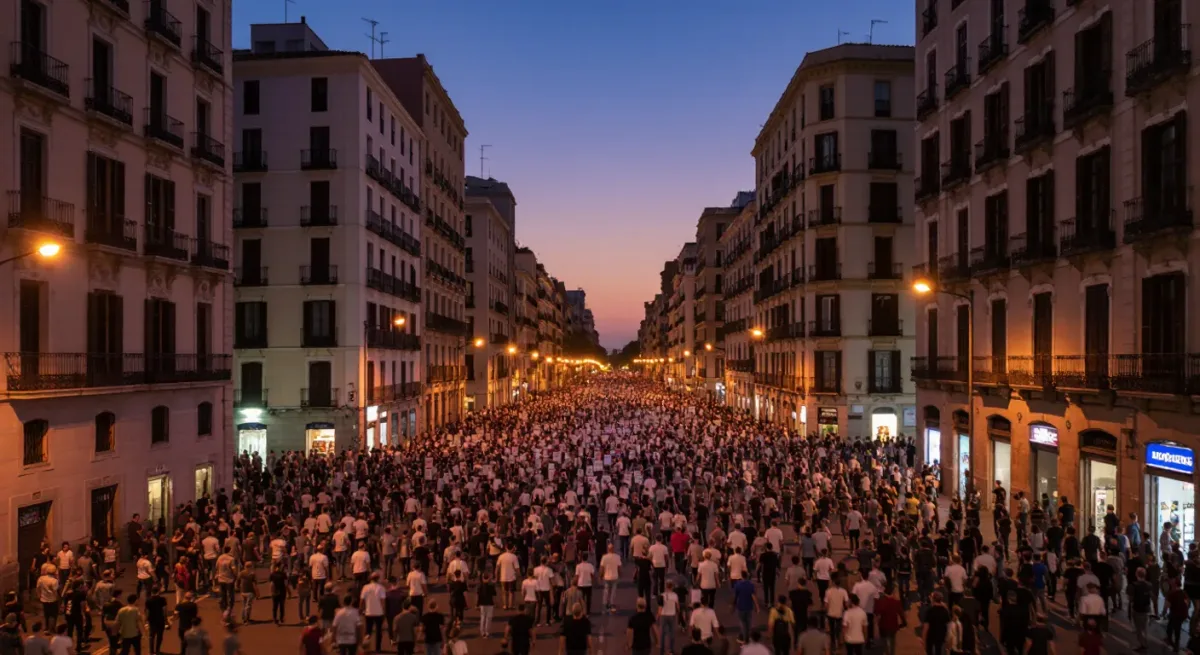
Tunisia closed the fifth anniversary of President Kais Saied's 2021 power grab under the worst conditions of his rule. A record-breaking heatwave combined with more than a week of nationwide blackouts and water cuts has left 150 to 200 reported deaths, per Euronews' July 25 report, and the opposition led thousands through Tunis on July 25-26 calling for the president's departure, the largest protests since the self-coup's early aftermath (Al Jazeera; Africanews).
The coincidence of dates and disasters defines the moment. July 25 is the anniversary both of Tunisia's republic and of Saied's 2021 seizure of emergency powers, when he dismissed the government, suspended parliament and began ruling by decree, a process that rewrote the constitution through a referendum the opposition boycotted. Five years on, the streets that marked each anniversary with shrinking demonstrations found new numbers, and new anger, supplied not by constitutional argument but by electricity bills paid for power that no longer comes.
The utility collapse
The proximate cause of the deaths is an infrastructure failure with an economic script. Tunisia's state electricity and water company has run a deficit system for years, reliant on subsidized fuel imports the state struggles to finance, with generation capacity that cannot meet peak demand even before the region's war raised the fuel-import bill. A record heatwave pushed demand past the system's envelope, and load-shedding rotations became a week of blackouts, with water pumping stations among the cut loads, leaving households without fans or circulation in temperatures the country had never recorded. The reported death toll of 150 to 200 covers the heat and outage period; the figures are being consolidated by authorities and civil society, Euronews reported.
The political accounting
Analyses through the crisis converge on a blunt point: the infrastructure failure has eroded Saied's standing more than any political grievance managed to. Brookings' assessment of Tunisia's summer of discontent argues the state's inability to keep the lights on, not the opposition's arguments, is what moved the protest numbers; Africa Confidential's reporting describes a presidency buckling under the utility crisis; and a Carnegie assessment of the five-year record judges the country economically and politically worse off than before the self-coup. The president's own contribution to the news cycle was a two-week public absence in July that triggered hospitalization rumors he dismissed as crazy, per reporting on the episode, an interlude that underlined the system's personalization.
| Milestone | Date |
|---|---|
| Self-coup: emergency powers, parliament suspended | July 25, 2021 |
| Heatwave blackouts, 150-200 reported deaths | July 2026 |
| Fifth-anniversary protests, resignation demands | July 25-26, 2026 |
The economy beneath the anger
Tunisia's macro position constrains every response. The state negotiates perpetually with international lenders over a financing gap it cannot close domestically, wage bills crowd out investment, and the war's shipping and energy costs arrived on top of a drought cycle that has already rationed water in prior summers. The subsidy system that keeps electricity nominally affordable is the fiscal fault line: cutting it deepens household pain, sustaining it deepens the deficit, and the blackouts have made the choice visible in every dark street. Emigration, the pressure valve of the decade, continues at levels that have emptied whole towns of their young adults.
What comes next
The scenarios analysts sketch run from managed decline to a rupture. Saied's system has survived five years on the opposition's fragmentation and the population's fatigue, and the question the summer poses is whether infrastructure can do what politics could not: unify a protest coalition around an immediate, non-ideological grievance. The opposition figures leading the July demonstrations span the pre-2021 party spectrum and the labor movement, an alignment the anniversary protests had not previously achieved. Early elections are not in the presidency's gift under the current arrangements, and the constitutional system Saied built contains no mechanism for his removal short of collapse. What the summer has already changed is the arithmetic of patience: a state that cannot deliver electricity in a heatwave has narrowed its own legitimacy to the argument that the alternative is worse.
The utility crisis, technically
The blackout mechanics deserve specificity because they explain the deaths. Tunisia's grid enters each summer with generation capacity stretched against peak demand that heatwaves push past planning assumptions, and the state utility's thermal plants depend on imported fuel the treasury buys with scarce foreign currency. When demand exceeds available generation, the system sheds load by design to avoid a national cascade blackout; the rotations become prolonged outages when the deficit persists for days, and the water system falls with the power because pumping stations sit among the cut circuits. Households without fans, refrigeration or water circulation in a record heatwave face the lethal combination heatstroke epidemiologists have documented across the Mediterranean's recent summers, and the elderly and the chronic-illness populations concentrate the toll. The reported 150-to-200 figure covers the outage period and remains subject to consolidation, but the mechanism is not in dispute, which is why the crisis has landed politically as it has: Tunisians can debate constitutional theory and disagree; a dead grandmother in a dark apartment during a heatwave ends the debate.
The next markers are mechanical: the weather forecast, the grid's daily load statements if the utility resumes publishing them, and the protest calendar that the opposition's coalitions will now attempt to hold together past the anniversary momentum that assembled it.
For the region's other summer pressure point, read our report on the US-Iran strike pause and the oil price plunge, and browse the MENA news section for continuing coverage.