What happened to Egypt's Zohr? The field Eni discovered in August 2015, the largest gas find in Mediterranean history at around 30 trillion cubic feet, took Egypt from gas deficit to exporter within three years, then declined faster than planned as drilling lagged and producer arrears accumulated, leaving the country a net LNG importer through recent summers. The boom was real; so was the reversal.
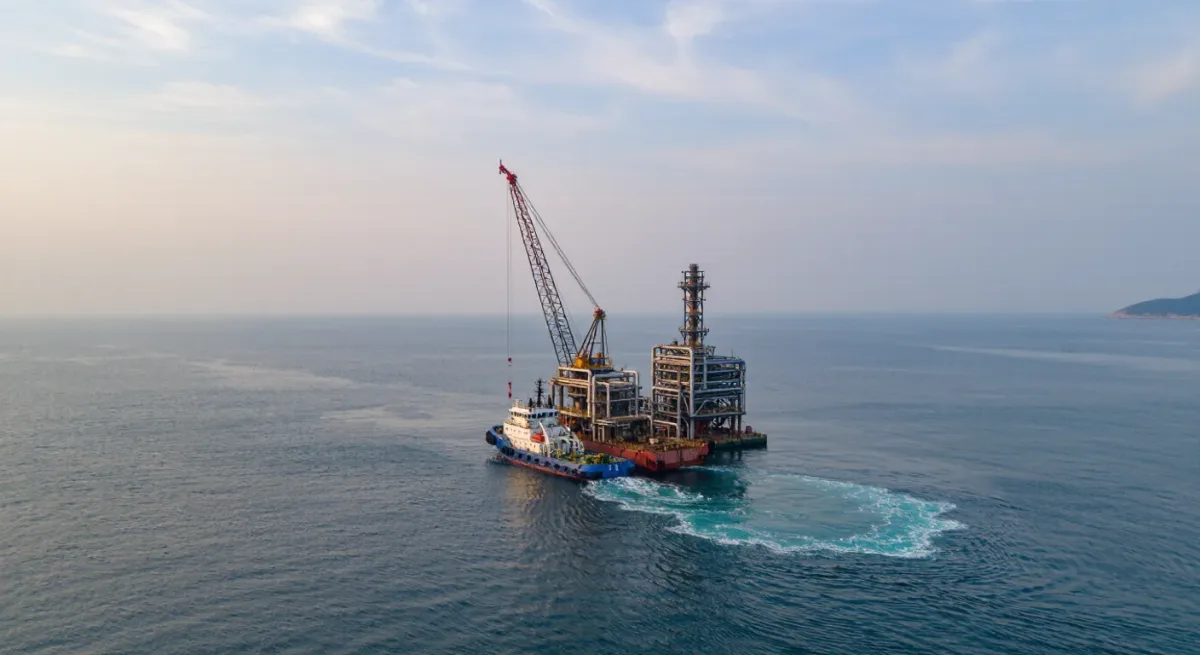
Zohr's originality was speed. Eni drilled the discovery well in the deepwater Shorouk block off Port Said in August 2015, appraised fast, and brought the field onstream in December 2017, barely two years later, a timeline the industry cites as a benchmark for deepwater development. Output climbed steeply: from nothing to above two billion cubic feet per day within 2018, and toward a plateau around 3.2 billion by 2019, making Egypt self-sufficient in gas, ending the import era of the mid-2010s and feeding the restart of the country's idle LNG export plants at Idku and Damietta.
The decline
Deepwater gas fields deplete fast unless continuously drilled, and Zohr's infill program slowed for a direct commercial reason: Egypt accumulated arrears to international producers as the foreign-currency crises of 2022-2023 bit, at points estimated in the billions of dollars and acknowledged by officials as a drag on investment. Companies that are not being paid drill less; the fields they drill less decline more. Output slid from the 2019 plateau toward the mid-twos in billion-cubic-feet terms, and the national balance flipped: with domestic production below demand, Egypt began importing LNG through floating storage and regasification units moored at Ain Sokhna and Sumed, through the summers of 2023 onward, while the export plants idled or ran part-time.
The Israel connection
The regional twist is that Egypt's LNG terminals stayed busy on someone else's gas. Israel's offshore fields, Leviathan, Karish and their neighbors, developed across the same years, export to Egypt through the EMG pipeline from Ashkelon, where the gas feeds domestic demand and the idle liquefaction capacity at Idku. The arrangement, revived under the 2019 framework and expanded since, made Egypt a processing hub for East Mediterranean gas even as its own production sagged, a structure with obvious geopolitical weight and equally obvious vulnerability, as pipeline supply pauses during regional escalation have demonstrated.
| Milestone | Date | Meaning |
|---|---|---|
| Zohr discovery | August 2015 | ~30 tcf, largest in the Mediterranean |
| First production | December 2017 | Two-year fast-track development |
| Plateau | 2019 | ~3.2 bcf/d; exports resume |
| Decline and arrears | 2022 onward | Drilling slows; output falls |
| Summer LNG imports | 2023 onward | FSRUs at Ain Sokhna meet peak demand |
The money behind the physics
Two features of Egypt's gas economy made the cycle sharper than the geology alone would have. The pricing and payment regime pays producers in local currency at terms that lag the dollar-linked costs of deepwater drilling, so every devaluation raised the real cost of the next well while arrears grew. And the demand side is peaked: household connections, power generation for brutal summers and industry all pull hardest exactly when domestic supply is tightest, which is why the import exposure arrives as a summer event, floating regasification vessels against the air-conditioning season, and eases each winter.
The fix underway
Cairo's program to retrieve the curve runs on three tracks. The payment one: clearing producer arrears, at least in negotiated tranches, to restart the drilling calendar, with the 2024 macro package, the Ras El Hekma inflows and the IMF program's FX reforms, designed partly to restore the sector's credibility. The exploration one: Mediterranean bid rounds and the invitation to Chevron, ExxonMobil and other majors into new offshore blocks, plus the Red Sea's opening, aim to add the next Zohr-scale chance. And the efficiency one: linking fields to the grid with less flaring and delay, and importing what the peak requires through the FSRUs. The stated aim, articulated across energy ministry planning, is a return to self-sufficiency and export capability on a multi-year horizon, a forecast that has moved dates more than once.
What to watch
- Drilling activity: rig counts and new field start-ups in the Mediterranean concessions are the physical leading indicator.
- Arrears reporting: producer disclosures and government statements on payment tranches track the commercial thaw.
- FSRU charters: how many regasification ships Egypt books for summer is the market's own forecast of the gap.
- EMG flows: Israeli pipeline nominations versus Egyptian LNG cargo liftings show the hub's direction of trade.
The East Mediterranean context
Zohr's story is inseparable from the basin it anchors. The same geological play that produced it, the deepwater biogenic gas of Egypt's offshore, extends to Israel's Leviathan and Karish, Cyprus's Aphrodite and the blocks still drilling, and the East Mediterranean has become a connected gas province with Egypt at its processing center. The idku and Damietta plants give the region its only liquefaction capacity outside the Gulf, and the strategy that follows, Israeli and Cypriot gas to Egyptian terminals for re-export, has survived politics that once made it unthinkable. The basin's constraints are the mirror of its promise: monetization runs through the Egypt route or new pipelines that nobody has financed, the maritime-boundary agreements that unlocked drilling took a decade of diplomacy, and the region's conflict risk now prices into every offshore insurance line. For Egypt, the play's meaning is strategic as much as fiscal: the country sits at the center of the East Med's gas map even when its own fields disappoint, and hub position, the terminals, the pipelines, the trading relationships, is the durable asset that no decline curve takes away.
For the region's cross-border power and gas interconnections, read our explainer on MENA's grid links from the GCC supergrid to the Egypt-Saudi line, and browse the energy section for the region's hydrocarbon coverage.