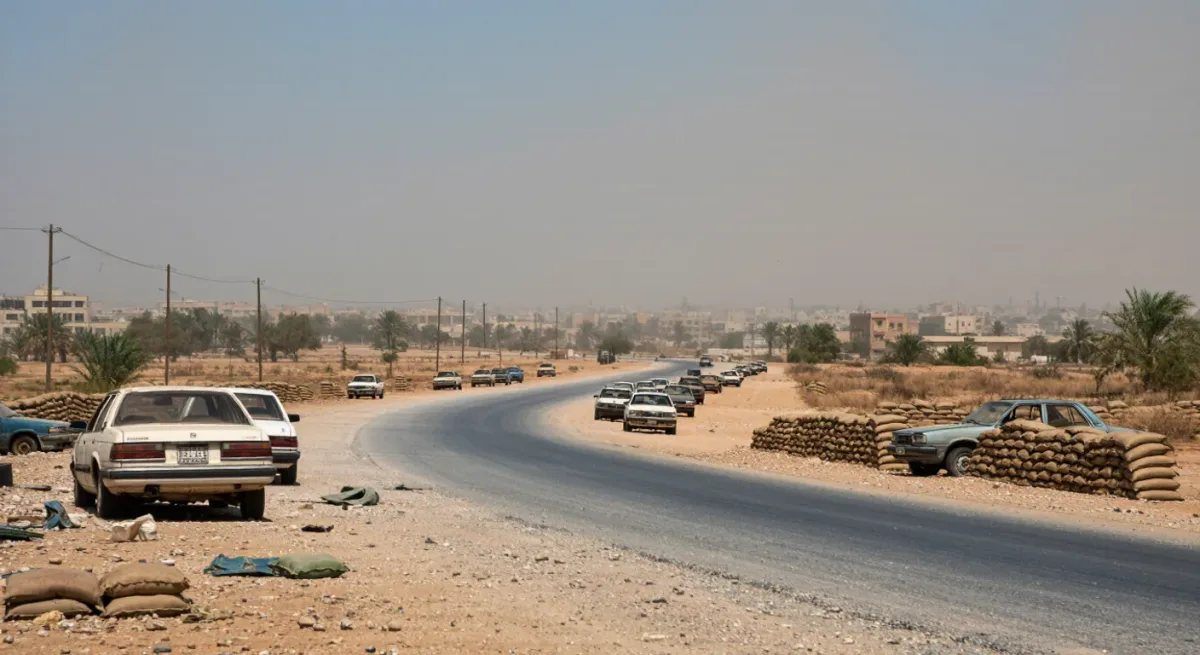
El Obeid, the capital of North Kordofan and one of Sudan's largest cities, is under siege by the Rapid Support Forces and facing relentless drone strikes, with the United Nations warning of a humanitarian catastrophe that could mirror the fall of El Fasher (UN News, July 6, 2026; Al Jazeera). The warning lands months after the RSF's assault on El Fasher in North Darfur, which UN human rights investigators have since documented as involving mass killings, systematic abductions and sexual violence bearing, in their words, the hallmarks of genocide.
The war's geography explains why El Obeid is now the decisive ground. The Sudanese Armed Forces recaptured Khartoum and Al Jazirah state in the war's central theater, pushing the conflict west and south, while the RSF took El Fasher in late October 2025 after the army's withdrawal, reshaping the Darfur front. Kordofan, the region linking the center to Darfur, became the new axis, and El Obeid, a garrison and trading city of strategic position on the supply roads, is the prize both sides are contesting through siege rather than assault.
What the warning says
The UN's concern is the pattern El Fasher established: cities encircled, markets and hospitals degraded by drone warfare, water and power cut, and civilian populations trapped between garrison defenders and besieging forces. El Obeid hosts a large displaced population that fled earlier campaigns, compounding the arithmetic of a siege. Aid agencies' access through Kordofan's roads was already constrained by insecurity and checkpoint taxation before the encirclement, and the drone campaign against urban infrastructure has been the RSF's signature method in this phase of the war.
The El Fasher precedent
El Fasher's fall in October 2025 and its aftermath set the reference point the UN invokes. The Office of the UN High Commissioner for Human Rights reported mass killings, systematic abductions of women and girls and mass rape carried out during the RSF's seizure of the city; Amnesty International's July 2026 report called the atrocities a stain on the conscience of humanity and documented crimes against humanity and ethnic cleansing against predominantly Masalit and other African communities; and a leaked UN Panel of Experts assessment, per BBC reporting, found RSF commanders directly ordered rapes and killings. The violence bore the hallmarks of genocide, UN investigators said, language that carries legal weight in the international system's slow machinery.
| Front | Status (July 2026) |
|---|---|
| Khartoum, Al Jazirah | Recaptured by the army |
| El Fasher, North Darfur | RSF-held since October 2025 |
| El Obeid, North Kordofan | Under RSF siege, drone campaign |
The regional dimension
Sudan's war is an Arab-league member's civil war with regional plumbing: the RSF's supply relationships run through regional patrons, the army's through others, Egypt and the Gulf states hold positions, and the Red Sea ports that move Sudan's trade sit inside the corridor now destabilized by the wider regional conflict. The overlap of Sudan's war with the Iran war's shipping disruption has cut both ways for relief logistics: donor attention and freight capacity have been absorbed by the Gulf crisis, while overland corridors from Port Sudan, functioning at the war's margins, remain the only reliable supply lines to Kordofan and Darfur. Neighboring Chad and South Sudan carry the refugee burden, with displacement from Darfur's campaigns already among the world's largest.
What happens next
Three factors will decide whether El Obeid becomes a second El Fasher or a negotiated relief case. The military balance: whether the army can break the siege from its Kordofan positions or the RSF consolidates control of the roads. The mediation channels: the regional and international initiatives that have attempted ceasefires across this war have a poor record, but city-specific humanitarian pauses have occasionally held when both sides' supply positions froze. And the accountability pressure: the genocide-characterization findings and the International Court of Justice case Sudan brought against the UAE over alleged complicity in the Darfur atrocities, which Abu Dhabi denies, form the legal backdrop against which besieging forces now calculate. The UN's early warning is itself part of that pressure, an attempt to make the next city's fate watched before rather than after.
The humanitarian corridor math
The response system's constraints are the story behind the warning. Sudan's relief operation runs through two axes, Port Sudan's sea corridor in the east and the cross-border lines from Chad into Darfur in the west, and El Obeid sits on neither, served by the internal roads that insecurity and checkpoint taxation have degraded for two years. The UN's local access negotiations, the humanitarian community's quiet daily diplomacy with garrison commanders and besieging forces alike, have historically kept trickle-level supplies moving into besieged cities, but trickle is the operating word, and the agencies' own contingency planning for El Obeid has run for months on scenarios that assume closure hardening. Funding compounds the access problem: the Sudan response plan has been among the world's most underfunded appeals relative to assessed need through the war's years, and the Gulf crisis's absorption of donor attention and freight capacity in 2026 cut the response's marginal capacity further. The warning's function is precisely to move the ledger before the fall: the system's record in this war is that cities are supplied before sieges and mourned after them, and the UN's July 6 statement is an attempt to stay on the right side of that pattern.
For the region's other open fronts, read our report on the Houthi blockade declaration against Saudi Arabia, and browse the MENA news section for continuing coverage.